






Zafforza Information Center
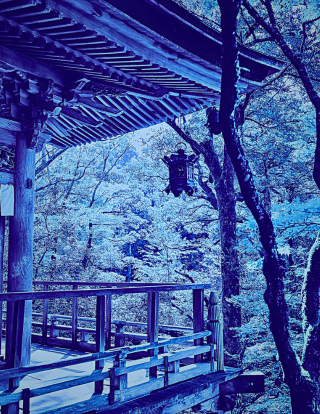
The Zafforza Information Center serves as the intellectual and historical heart of Zafforza City, preserving centuries of records, magical research, civic histories, and literomantic knowledge beneath the crushing depths of the trench. Spread across multiple interconnected buildings in one of the city’s air-filled areas, its layered rooftops, illuminated walkways, and lush greenery create a serene campus-like atmosphere inspired by traditional Japanese architecture.
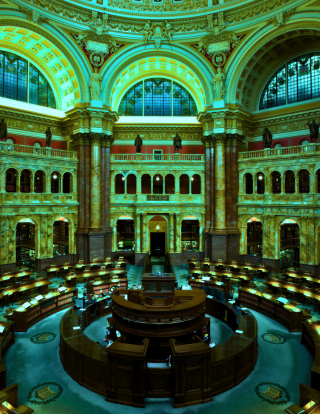
Though officially dedicated to education and preservation, the Center carries an unmistakable air of secrecy. Towering crystalline data banks line the halls beside handwritten archives, blending advanced information systems with ancient archival traditions. Information Specialists quietly maintain the facility—cataloguing records, restoring damaged texts, assisting scholars, and overseeing restricted collections hidden behind sealed corridors and guarded shelves. Many visitors describe the Center as feeling less like a library and more like something alive: silent, watchful, and unwilling to forget.
Though officially dedicated to education and preservation, the Center carries an unmistakable air of secrecy. Towering crystalline data banks line the halls beside handwritten archives, blending advanced information systems with ancient archival traditions. Information Specialists quietly maintain the facility—cataloguing records, restoring damaged texts, assisting scholars, and overseeing restricted collections hidden behind sealed corridors and guarded shelves. Many visitors describe the Center as feeling less like a library and more like something alive: silent, watchful, and unwilling to forget.
Purpose / Function
The Zafforza Information Center serves as the primary archival, educational, and research institution within Zafforza City, preserving the cultural memory, civic history, and literomantic knowledge of House Mollusca. Its official responsibilities include maintaining historical records, cataloguing magical research, training Information Specialists, restoring damaged manuscripts, and providing controlled public access to approved archives and the crystalline data system.
Beyond its public role, the Center also functions as a secure preservation site for restricted materials considered historically dangerous, politically sensitive, or magically unstable. Certain lower archive sections are dedicated to containment, observation, and long-term preservation of texts and records deemed too valuable or too hazardous to destroy. Due to the importance of these collections, the facility operates under House Mollusca administration with partial Asteri oversight.
Beyond its public role, the Center also functions as a secure preservation site for restricted materials considered historically dangerous, politically sensitive, or magically unstable. Certain lower archive sections are dedicated to containment, observation, and long-term preservation of texts and records deemed too valuable or too hazardous to destroy. Due to the importance of these collections, the facility operates under House Mollusca administration with partial Asteri oversight.
Design
The complex consists of multiple interconnected buildings arranged around interior courtyards and reflection pools. Sliding reinforced doors, curved roofs, dark lacquered wood, stone pathways, and hanging glowkelp lanterns dominate the aesthetic.
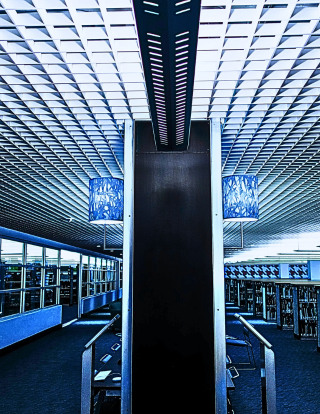
Interior archive chambers are expansive, with:
- Polished black stone flooring
- Pressure-treated wooden support beams
- Softly glowing crystalline interfaces embedded into walls
- Suspended signage written in flowing script
Entries
The main entrance consists of reinforced sliding gates framed by carved trenchstone and bioluminescent inlays. Interior sections are connected through covered walkways and enclosed corridors.
Restricted areas require:
- Authorization seals
- Identity verification through crystalline interfaces or
- Escort by an Information Specialist.
Sensory & Appearance
Visitors entering the Information Center are typically met with:
- The soft glow of suspended lanterns and crystal interfaces
- The quiet hum of data systems
- The scent of polished wood, old books, and seawater
- Distant echoing footsteps across stone corridors
Denizens
The facility is primarily staffed by Information Specialists, archivists, scholars, attendants, and preservation technicians.
Common visitors include:
- Researchers
- Tome Knights
- Students
- Asteri observers
Contents & Furnishings
The Information Center contains:
- Crystalline data terminals
- Preservation chambers
- Towering bookshelves
- Reading alcoves
- Transcription desks
- Ceremonial scroll displays
- An indexing system
- Pressure-sealed archive vaults
- Low wooden tables
- Woven floor mats
- Lacquered cabinets
- Suspended paper lanterns
Valuables
Among the Center’s most valuable holdings are:
- Ancient trench migration records
- Restricted literomantic manuscripts
- Pre-war archival fragments
- Sealed Asteri correspondences And
- Unstable magical texts stored within protected vaults
Hazards & Traps
While publicly safe, restricted sections employ numerous security measures:
- Literomantic identification barriers
- Pressure-lock corridors
- Memory-seal wards
- Magical tracking sigils
- Automated archive lockdown procedures
- Emotional distress
- Memory distortion Or
- Magical instability when improperly handled
Special Properties
The crystalline archive system stores written information. Certain sections of the building appear resistant to magical decay, preserving fragile texts far beyond normal lifespan expectations.
Some scholars claim the Information Center possesses a semi-sentient indexing system capable of relocating or prioritizing records based on user intent.
Officially, these claims remain unverified.
Some scholars claim the Information Center possesses a semi-sentient indexing system capable of relocating or prioritizing records based on user intent.
Officially, these claims remain unverified.
Alterations
Over centuries, the Information Center has expanded repeatedly to accommodate:
- Population growth
- Advances in crystalline data storage
- Wartime preservation efforts and
- The increasing need for restricted archival containment
Architecture
The architectural style draws heavily from traditional Japanese temple and academic complexes, adapted for underwater engineering requirements.
Key features include:
- Layered curved rooftops
- Enclosed gardens
- Elevated walkways
- Dark wood construction
- Stone foundations
- Minimalist interior spaces emphasizing balance and stillness
History
The Zafforza Information Center was established during the early development of Zafforza City as House Mollusca’s central archive and scholarly institution. As the settlement expanded beneath the sea, the need for a dedicated repository of records, literomantic research, civic histories, and cultural traditions grew alongside it. What began as a modest archival hall gradually evolved into a sprawling campus-like complex as generations of scholars, archivists, and Information Specialists continued to expand its collections.
Over time, the Information Center became one of the most respected centers of learning within the trench, known for balancing traditional handwritten preservation methods with advanced crystalline data storage. The Asteri later became involved in the preservation and oversight of certain collections, particularly those considered historically significant or magically sensitive. While the institution publicly serves education and historical preservation, rumors persist that some sections of the Center contain sealed records intentionally withheld from public knowledge and intentionally omitted from official history.
Over time, the Information Center became one of the most respected centers of learning within the trench, known for balancing traditional handwritten preservation methods with advanced crystalline data storage. The Asteri later became involved in the preservation and oversight of certain collections, particularly those considered historically significant or magically sensitive. While the institution publicly serves education and historical preservation, rumors persist that some sections of the Center contain sealed records intentionally withheld from public knowledge and intentionally omitted from official history.
Tourism
Visitors come to admire:
- The Center’s serene architecture
- Crystalline data galleries
- Preserved historical collections and
- Interior reflection gardens
WIP
Streamer
Missing
Status: Location Unknown
Deceased
Status: Deceased Character
Retired
Status: Retired Character or Article



Navigation
Alternative Names
The Center, The Listening Halls
Type
Library
Parent Location
Environmental Effects
The Information Center maintains a calm, cool atmosphere with carefully regulated pressure and humidity systems designed to preserve delicate manuscripts and crystalline memory banks alike.
Soft currents circulate through all the buildings, carrying faint scents of saltwater, old paper, seaweed fiber, and polished wood. Certain lower archive halls dampen sound unnaturally, causing footsteps and whispers to feel muted beneath the weight of the surrounding trench.
The crystalline data banks emit a low harmonic hum that can be felt more than heard.
Soft currents circulate through all the buildings, carrying faint scents of saltwater, old paper, seaweed fiber, and polished wood. Certain lower archive halls dampen sound unnaturally, causing footsteps and whispers to feel muted beneath the weight of the surrounding trench.
The crystalline data banks emit a low harmonic hum that can be felt more than heard.
Owning Organization
Contested By
Crystal Data Galleries
Scriptoria
Restricted Collections
Scholar Gardens
Lower Archives
Information Specialist Offices



Comments