To invent, you need a good imagination and a pile of junk.— Thomas A. Edison
The true alchemists do not change lead into gold; they change the world into words.— William H. Gass
Invention... does not consist in creating out of void, but out of chaos.— Mary Shelley
Artisimancy, "crafting magic," is an art that dates back to the Bronze Age. This magic is centered in the idea that magic, itself, is a form of creation, and therefore, combining it with the process of creating things is a natural fit. Rather than reacting to situations on the battlefield, Artisimancers plan ahead. They build items that can be utilized to release the magical potential and effects they contain, or that enhance some ability of the
Literomancer using it. This form of magic encompasses a wide variety of disciplines, including such practices as smithing, fiber arts, paper crafts, and alchemy. This is the domain that is most favoured by
House Chiroptera.
Manifestation
Above all, Artisimancers are drawn to experimentation, invention, and play. They usually find an affinity to particular crafts and materials. Their approach to their
Literomancy is a strange combination of scientific method and testing, and "what would happen if?" They start by learning the basics, teaching themselves sound principles, and then throwing random spaghetti at the wall from there to see what sticks. The general principle, to those who observe these wild, mad scientist-like experiments, appears to be "filk around and find out."
If it's fun, that's the best way!
They also have a marked interest in reviving arts and crafts that have fallen out of fashion, especially if it relates to a "materials affinity." Often, when an old craft is seeing a modern resurgence, they are the ones behind the revival.
Let me tell you all about the wonders of nalbinding!
Artisimancers believe that complexity is a good thing. The more steps one adds to the creative project, the more opportunity arises to build magic into it. Further, the more personal effort one puts into a project, the more
Literomantic Power it contains. The tapestry of interrelated enchantments they weave together can be every bit as complex.
So, let's say you're making a jumper. Ideally, you'd sheer the sheep, dye the wool, spin the yarn, crochet the jumper, and then sew the buttons on yourself. Each stage gives you a chance to add more enchantments.
This form of magic is a good choice for neurodiverse
Literomancers. Skill at crafting is important, so having a "special interest" doesn't hurt. Neither does having the ability to see things in a different way, embracing pattern recognition skills, and drawing upon obscure details that most people simply would not know.
Oh, ew! That number is the wrong color!— Queen Tara
Sensory effects of Artisimantic manifestations include a sense of wonder and fun, sparkly glittery particles, random giggles, brightly coloured smoke, scents like cotton candy, liquorice or buttered popcorn, and random sneezes.
Artisimantic Law
Law of Artisimancy
Creativity is magic.
The Alchemist's Corollary
Everything changes, but nothing is destroyed.
The Weaver's Corollary
Complexity is good! More steps in the process means more pockets of potential.
The Carpenter's Corollary
Any two things can combine with enough glue, hammering, or duct tape.
The Inventor's Corollary
The more creative energy you put into a project, the greater the magic.
The Painter's Corollary
The more emotional energy you put into a project, the more the magic is amplified.
The Clockworker's Corollary
If something isn't moving, and you want it to, it won't until you poke it. If something is moving and you want it to stop, it won't until you poke it.
The Wonderworker's Corollary
Fun increases the magic.
The Smith's Corollary
Bend it until it breaks.
Areas and Types
Artisimancy can be thought of in two parts, and these parts work in tandem. The first part is what they are making. The second is what it does. Runes, symbols, correspondences and simple prose are used in the enchantment process, or built into the item. As an Artisimancer progresses, they learn both how to build progressively more complicated items, and to create progressively more challenging or complex effects.
Note that any
Literomancer is capable of creating a magical item. Artisimancers just tend to make this their focus, and they often find an easier time of it than other practitioners.
While there are no firm rules about "spell costs" in Game of Tomes, the GM has a loose "gauge" of how much each act of magic might cost in terms of
Werdz (units of literomantic power, like watts). Usually, it requires more literomantic power to imbue magic into an item than it would to enact the effect alone, unless linked to a
Trope, especially if it is intended to be something that is more permanent. Artisimancers do not experience this additional cost, because it is essential to the way their magic works.
Literomancy Levels
Minimum level needed is listed before the ability/spell. Variations are listed below.
| Symbol | Level + Description |
|---|
| | Beginner: Anyone may learn this ability.
Similar to a cantrip or low level spell. |
| | Advanced : Achieved after study and practice.
If the mage is from outside the originating House or group of this magic type, they need to train under a Master of this magic school from the originating House or group. (If the power is shared between Literomantic schools, the Literomancer trains under one of the appropriate House's/Group's Masters for that area.)
In other words, please talk with the House or group that is known for that type of magic. |
| | Master: Achieved after considerable study and practice, usually after tutelage under a Master.
A Master may be a member of another House or group. |
| | Reserved: Epic level aspect, reserved ability.
This is usually reserved for an individual player, House, or group. |
Artisimancy Sharing Key
Minimum level needed is listed before the ability/spell. Variations are listed below.
Exceptions and shared magic domains are noted.
Structure
Talismans
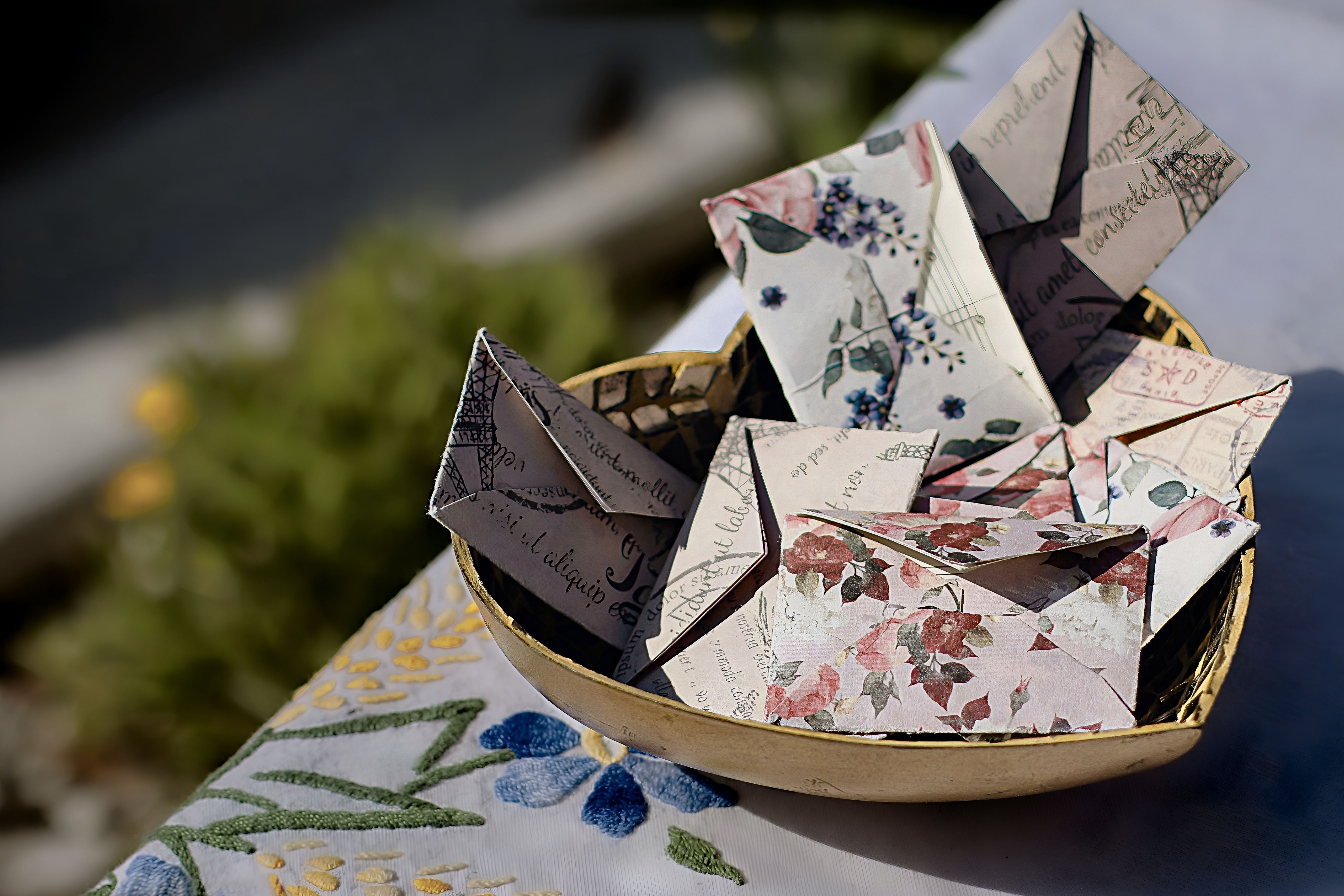
Simple, one-use items, usually created with disposable materials. Some examples would be the sticky notes utilized by The Totally Bat Squad, or the origami healing charms created by Queen Tara and Queen Sable working in tandem for The Battle of Crystal Song.
Potions
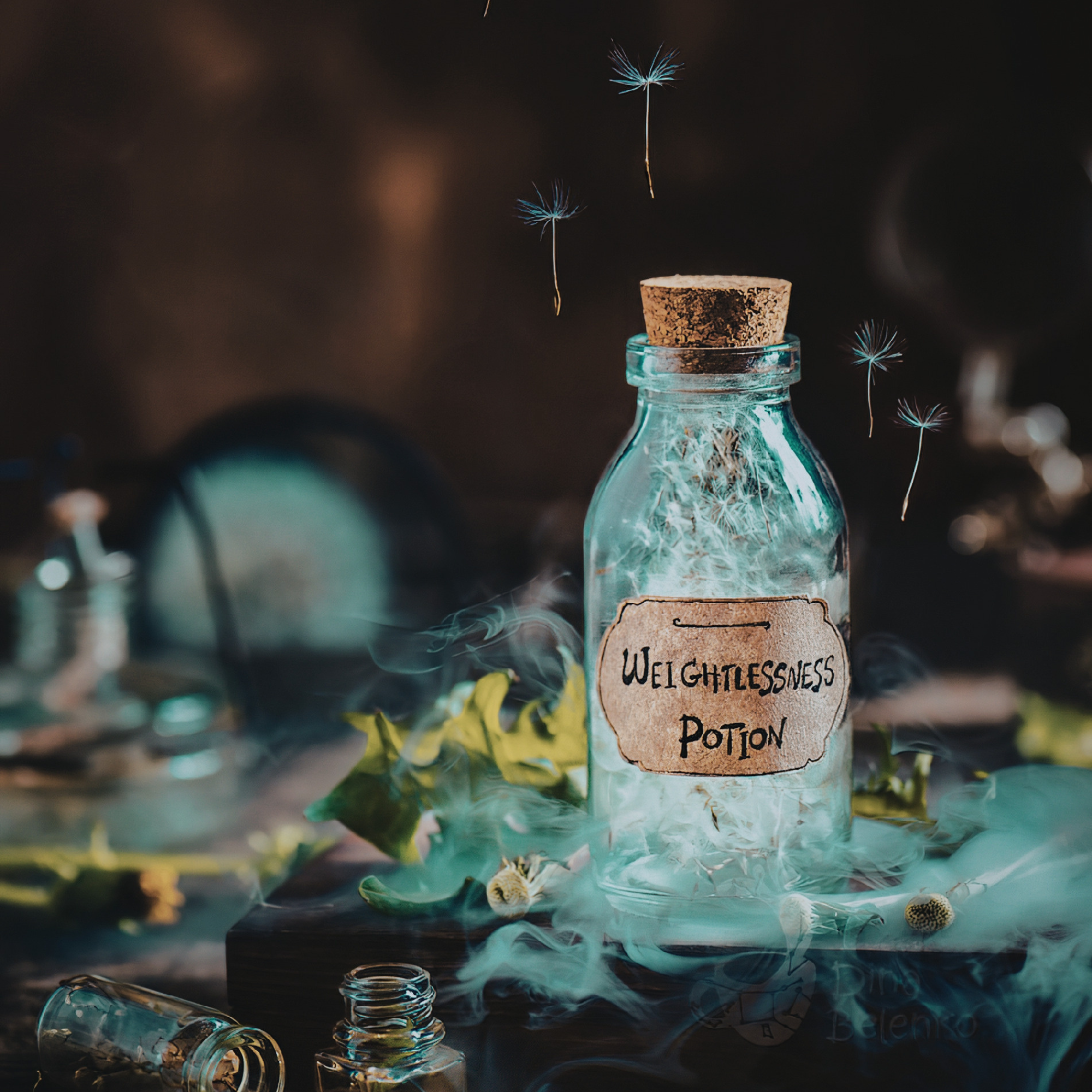
Liquids intended to be drunk, or applied externally, for an effect of limited duration. An example would be the Chiroptera Coffee Creamers.
Charms
Usually, small items with magical effects attached to them that remain as part of the item, but have to be consciously activated for limited durations. Examples would be Witch Bottles, or the bracelet given to Queen Sable that allows her to access The Bat Network.
Inks
Liquids intended to be written with to aid literomancy. Queen Tara specializes in these, both for general magical purposes, and for complimentary enhancements, with inks charged to specific magical purposes.
Amulets
Items, usually intended to be worn or carried on someone's person, that have an ongoing and continual effect. These require more literomantic power to create and there is a risk of Magic Drain when doing so. Examples would be Queen Tara's crown or the Key to the Lapin Library.
Devices
Simple magical machines or items with an ongoing, singular and simple purpose. These require more literomantic power to create and risk of magic drain is moderate. Examples would include the magical heaters James Woodwright and companions built in A Tomesmas Carol, or the magical printing press in the Lapin Secret Library.
Apparatuses
Complex magical machines, often requiring significant literomantic power to create, and sometimes requiring literomantic power to use. Creating these has a high risk of magic drain unless they are enchanted gradually over time. An example would be the Chiropteran Tab Cannons or Cheetya Ironfist's armour and flying suit.
Automatons
Magical machines with some indication of an independent intelligence that acts on its own to make use of a particular magical effect or effects. Like with Apparatuses, risk of magic drain depends on the amount of time one is willing to spend on gradual enchantments. Examples would include Cheetya Ironfist's "Bunny Mech," The Cavern's "Chompers", or possibly even the Cavern itself. (Shared with Technomancy.)
Golems
Magical machines with independent intelligence and free will. Risk of magic drain is always high in their creation. Examples would be the coffins created by Undead Chiropterans in The Third Word War, Sir Trashy, and Squish and Release. Although such beings would lack physical bodies, this category would technically also include sapient AIs. (Shared with Technomancy.)
Artifacts
Powerful, permanent magical items, with or without their own free will. Magic drain is almost guaranteed when creating one, unless it is accomplished through a cooperative group ritual. Examples would be The Iron Crowns of the Woodlanders and The Iron Tome.
Effects
Buff/Debuff
The item applies either a benefit or a bane to the recipient. These are usually either a temporary benefit, or compensation for a disadvantage, that lasts for a short duration once activated. Buffs and debuffs stack. They do not negate one another.
Examples of buffs include:
heightened senses
better concentration
emotional calm
flight
improved balance
Examples of debuffs include:
impaired senses
reduced concentration
confusion
impaired movement
For more examples, see Chiroptera Coffee Creamers.
Advanced practitioners can imbue multiple buffs or debuffs that can be activated all at once, or extend the duration to last up to a week or two.
Masters are capable of imbuing a buff or debuff on a permanent basis (until deactivated or dispelled)
Paper Airplane Message
Allows a literomancer to write a message on a piece of paper and send it to the recipient remotely through various means. (See spell description - shared with Aeromancy)
Natural Medicine
Draws out and enhances the associated powers of a natural item, such as an herb, essential oil, or crystal. These items must be prepared in a way that would typically access those properties (ie. lavender must be applied externally to help heal scars, and drunk as a tea or applied as an essential oil to calm nerves; lepidolite, which contains natural lithium that gives it the distinct indigo/purple colour, must be taken internally in small doses to stabilize mood; hematite much be worn or carried to ground magical energy, etc.) Note that this can be used in a negative as well as a positive way (ie. enhancing the toxicity of a poisonous plant or mineral) (This is very similar to the Vivimancy power Herbal Medicine)
Advanced practitioners don't have to prepare the items first, they just have to have them in their possession. They can also use the item with no risk of poisoning.
Masters may access supernatural properties that are typically associated with the item. (ie. salt really will keep fae away)
Animation
Gives the power of motion to something that probably shouldn't have it (ie. a paper crane flaps its wings and flies)
Advanced practitioners might be able to animate something larger, such as a flying broom, or give a prosthesis the flexibility of a natural limb
Masters can animate even larger things, such as a large automatons (ie. the Bunny Mech) or large furniture-sized items (ie. the animated coffins of 3WW)
The most advanced practitioners could potentially animate a complex of buildings (ie. the Cavern) or the contents of an entire room (cue scenes such as The Sorcerer's Apprentice and Beauty and the Beast.)
Spell Catalyst
Stores a spell in a material item for later use. Activation usually involves interacting with the item in some way (ie. tearing an origami charm, wearing a sweater, touching a gem on a piece of jewellery, etc.)
Advanced practitioners can imbue a single item with multiple enchantments to be activated at once.
Masters can imbue the spells of other people into items (like in the Battle of Crystal Song).
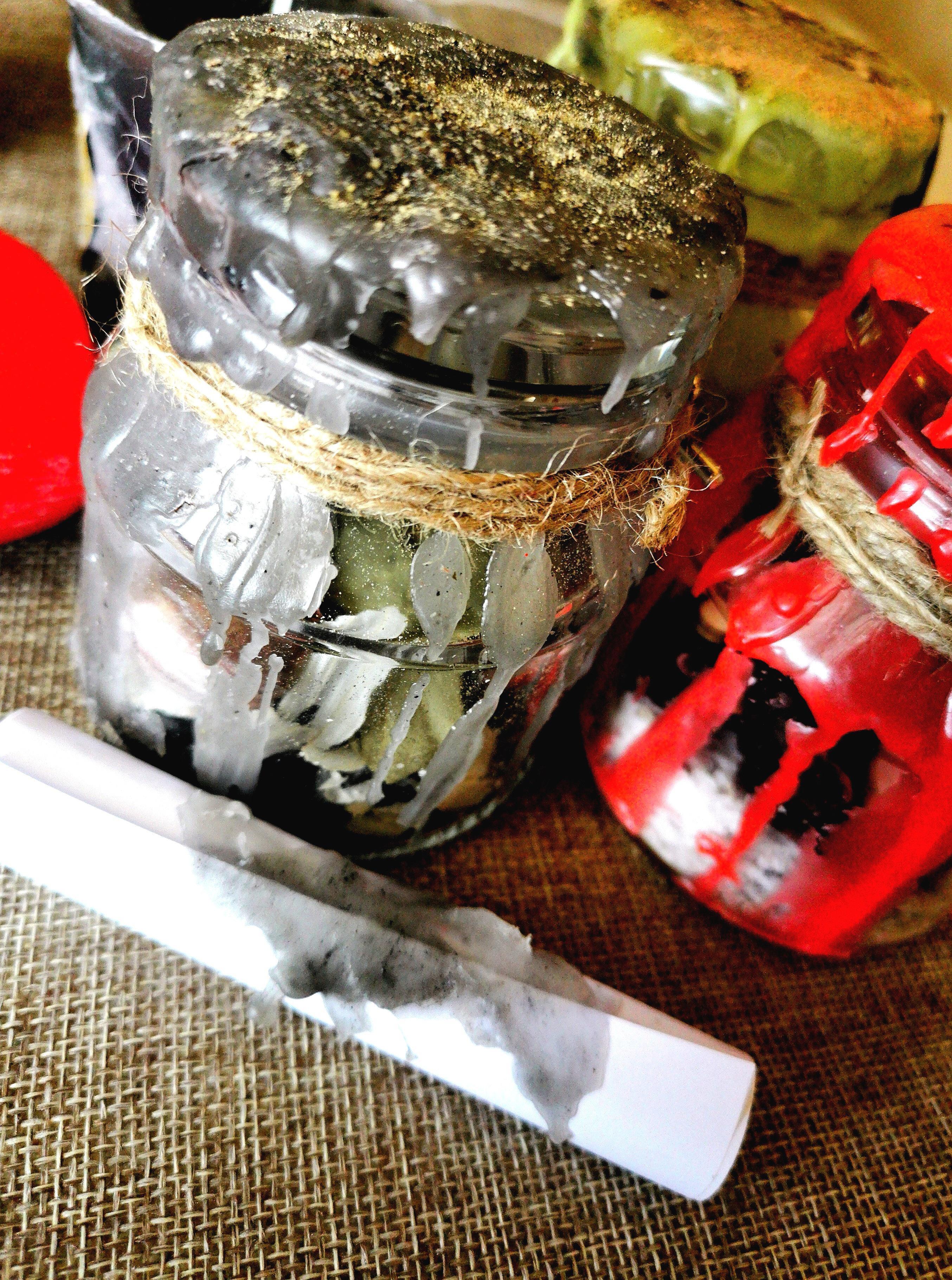
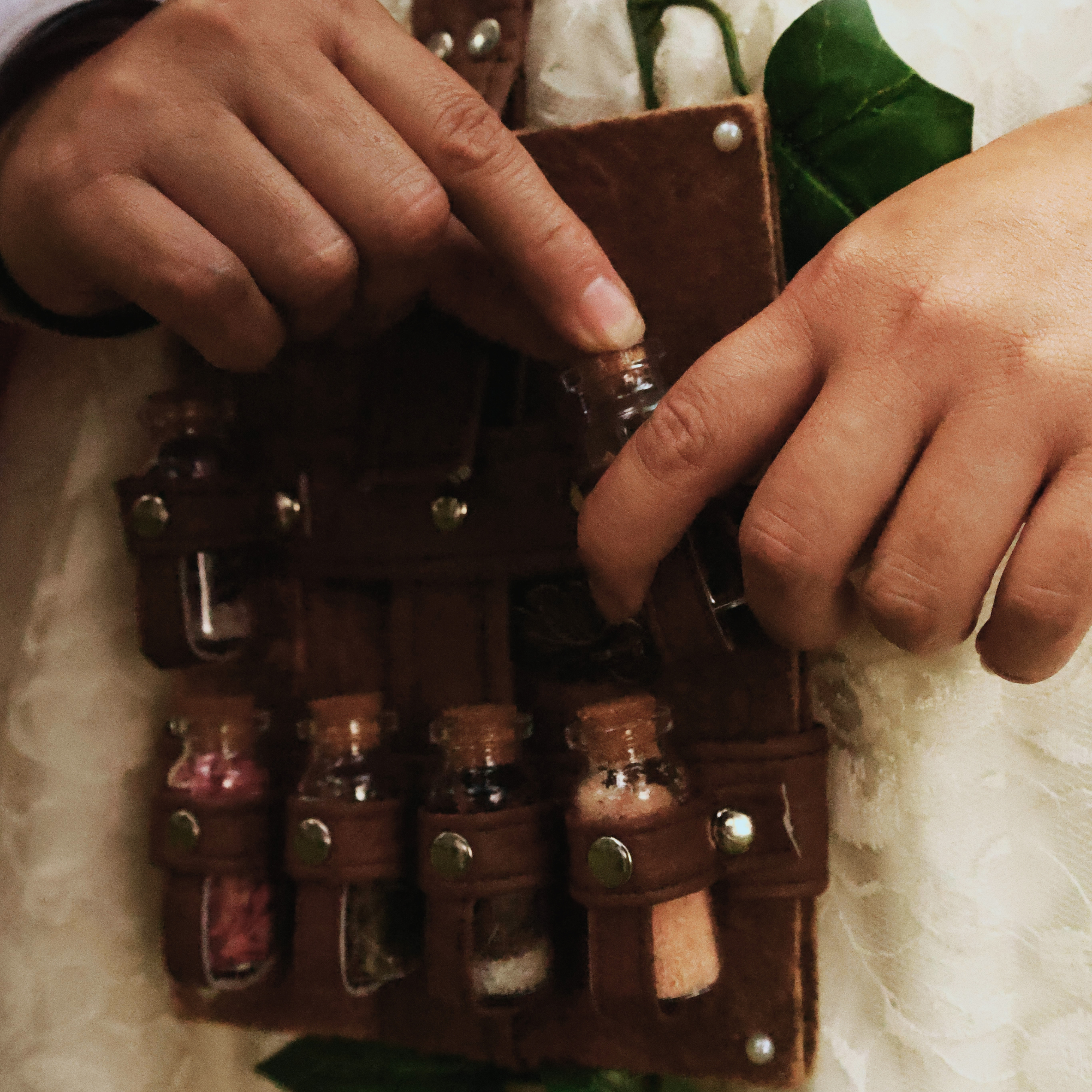
Spell Vessels by Pixabay
Advanced practitioners can continually charge additional literomantic power into the witch bottle even after it has been created.
Witch bottles created by Masters produce a "reflection" effect on diverted magical attacks (ie. they bounce back onto the caster)
Friendship Bracelet
Imbues two items of jewellery with a connection that links the people wearing them. Often, these items are identical (ie. identical rings,) very similar (ie. friendship bracelets woven of the same materials,) or connecting (ie. a heart locket with a key, or two "half-heart" necklaces). The two connected people can send simple empathic messages to each other through the jewellery, such as a call for help or a warm feeling of love.
Advanced practitioners can send simple verbal messages as well.
Masters can send direct magical aid (ie. a charm of protection) or, if they possess the ability to teleport, can teleport directly to the other's location.
Manifestation
The Artisimancer can jury-rig a material item to give a tangible or material form to an intangible thought or idea. Examples have included:
Coffin golems converting living literomancers to Tome Zombies once trapped inside
Tab cannons firing browser tabs and popup windows at opponents, which then become physical force fields that freeze opponents in place (usually with the added insult of being stuck in annoying advertisements)
Gem carvings holding positive feelings of love and friendship, which is how Queen Tara redeemed AttorraRu and claimed the Iron Tome in The Fourth Word War.
Memory Box
Imbues an item with emotional properties they associate with a particular person. When the Artisimancer interacts with this item, the quality they wish to remember is brought to mind (ie. resilience, hope, joy, love) and gives them a morale boost, usually at a critical moment. Despite the name, this power can affect a number of different items. Examples have included jewellery, a favourite toy, a photograph, etc. Often associated with a loved one who has passed on.
Put a Pin in That
Imbues an item with a thought or memory, with an intention to return to it later. When the Artisimancer interacts with an item that has a stored thought, memory, or idea, it will come flooding back to them with all the freshness of the original thought. The pioneer power of this imbues the thought into a hairpin that can later be removed and interacted with, but technically, a thought could be "stored" in any item.
Masters can create "pins" that other people can use.
Powerweaving
Imbues clothing, blankets, etc. with magical properties related to the natural powers of the individual from whom the materials were gathered. (ie. blankets made from Queen Sable's fur glows like starlight, feels like a warm hug, and heals minor ailments; scarves or beanies made from Denver Grant's fur insulates the body against heat and cold, etc.) Effects may vary broadly depending on the literomancer making the item. (Shared with Vivimancy)
Alchemical Transition
Changes matter from one state to another. Note that this is specifically the state of matter that is altered (solid, liquid, gas, plasma, energy,) not the basic atomic structure, and there must be some kind of "logical" magical correspondence (ie. gold could be changed into golden light, but lead could not. Nor can lead be changed into gold; that's for Geomancy to do.) This is a dangerous process, because it can give off or take in massive amounts of energy and heat. While technically possible, it is not feasible on a production scale.
The "True" Alchemists
Several domains, specifically Artisimancy, Geomancy, and Technomancy, have practices that would fall under the description of "alchemy." So which ones are the "actual" alchemists?
The answer depends on your understanding of the term. If one means early chemistry with a metaphysical element, the closest would be the Technomancers, who believe that what we call "magic" is really just advanced technology. If one means the actual transmutation of matter on an atomic level, the Geomancers would be the closest. And if one means the term in the more metaphysical sense, the idea of the transmutation of matter being a metaphorical transformation of the spirit, that would be the Artisimancers.
This is an excellent example of one of the pitfalls of literomancy — much depends on the meaning one assigns to a word in relation to commonly understood connotations, which can vary broadly across cultures and subcultures, economic and social classes, or even generations.
Scale Model
Turns a model of an item into a full-sized functioning version of that item. Examples might include a ship in a bottle, model cars, origami birds, LEGO airplanes, dollhouses, or terra cotta soldiers. This power can also be reversed — so one could essentially carry a building, a car, or a fighter jet in their pocket for when it is needed. This ability costs a considerable amount of literomantic power to imbue, and may cause magic drain if enchanted too quickly or used too often.
WD-40 and Duct Tape
It is said that "if something moves, and it shouldn't, use duct tape; and if something doesn't move, and it should, use WD-40." This power allows the Artisimancer to apply this principle to anything. Limbs can be reattached, sealed containers can be opened, entire walls can be built to hold back floods or landslides... the possibilities are endless. Note that this does not actually heal or repair whatever is being stuck together or loosened, but it will allow normal function to return as long as the duct tape or WD-40 is present (so a reattached limb will not heal until healed by a Vivimancer, or by the body's natural powers, which may restore limited function like a surgery; but an engine of a vehicle literally could be kept functional by duct tape and WD-40, because it will continue to function, even if it looks odd.) Risk of magic drain depends on the size and scope of the "repair."
Note that while the name of the power specifies ingredients, this could also apply to any adhesive or lubricant.
The above is only a sampling of Artisimancy's possiblities. New discoveries from Artisimancers and research from
Chiroptera's Sekret Library will be added as they are discovered.
Known Variants in Other Houses
Technomancers
It should be noted that there is a lot of overlap between Technomancy and Artisimancy in some areas, mostly because both of them tend to work with items as opposed to raw magical effects. However, their approach is completely different.
Raptor Captain Dazzlinkat has created several Automatons (drones) and at least one "golem" ( Sir Trashy .)
Cheetya Ironfist has created a number of Amulets, Devices, Apparatuses, and the occasional Automaton
Buddha Kwake has created at least one Device (a nanobot scanner)
Natural Medicine
Is very similar to the Vivimancy power Herbal Medicine
Magical Art
Archon The Bard with Many Names and Xalafan often create magic with the use of art, and this could be said to overlap Artisimancy in a number of ways
History
Magical devices are well-known to myth and history, so likely there have been Artisimancers since the dawn of civilization. There are historical and mythological artifacts from multiple cultures that seem like obvious Artisimancy to its practitioners. Some examples of this include the terra cotta soldiers of ancient China, Excalibur, and Fafnir's Ring.
The history of Artisimancy within House Chiroptera is a bit more specific. They have inherited a document called "The Manual of Artisimancy," often simply called "The Manual," which was discovered in
Chiroptera's Sekret Library by Queen Tara.
However, the mindset of Artisimancy does not appear to lend itself well to clear instructions. Most Artisimancers initially discover the art on their own and consider writing down the basics for others. Many an Artisimancer has begun work on updating the Manual into something functional and beginner-friendly, only to go flying off after their own exciting pet projects.
Hence, what purports to be the Manual is, in fact, a huge pile of half-written-in notebooks, random scrawls on napkins, and scattered project notes on papers and scrolls, in which much of the information is duplicated multiple times when people get the idea to "start again from scratch." The entire contents would fill at least one large shipping container, and is in no vague semblance of a logical order.
Still, Chiropterans do try to sort through it from time to time, and at least skim a thing or two, which helps them in their practice... although almost all of them also go in mad pursuit of new pet projects inspired by something they read.
We still don't have a set manual, but we do have a bunch of weird cool stuff to muck around with!— Queen Tara










Comments